Don’t Trust the Response: How Client-Side Assumptions Broke Core Business Logic
A deep dive into response manipulation vulnerabilities and how trusting client-side flags led to verification bypass and subscription abuse through broken business logic.
Disclaimer
This article is published strictly for educational and defensive security purposes.
All techniques discussed here must only be tested on applications you own or are explicitly authorized to assess (for example, under a bug bounty program).
The goal of this write-up is to help developers, security engineers, and researchers understand why trusting client-side responses is dangerous, and how to design systems that cannot be bypassed through simple manipulation.
Introduction
When people think about serious web vulnerabilities, their minds usually jump to things like SQL injection, remote code execution, or deserialization bugs. But in real-world applications-especially SaaS platforms-some of the most damaging flaws are not technical exploits at all.
They are business logic failures.
This write-up walks through a real-world case where an application trusted response values sent to the client to enforce critical controls like:
- Email and phone verification
- Subscription and plan restrictions
By intercepting and modifying server responses in transit, it was possible to bypass verification checks and even defeat the entire subscription enforcement model-without exploiting the backend directly.
This is a story about why the server must never trust what the client believes to be true.
What Is Response Manipulation?
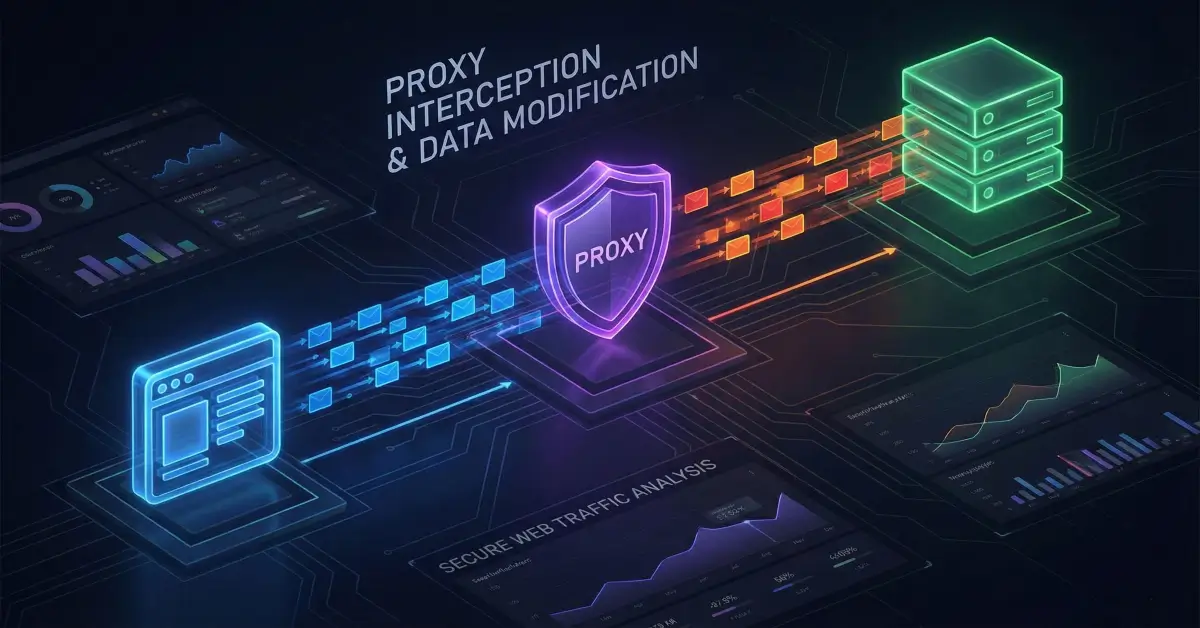
Response manipulation is a class of attack where an attacker:
- Intercepts a server response (HTML or JSON).
- Modifies values inside that response.
- Forwards the altered response to the browser.
- Lets the client-side application behave as if the server approved an action.
This is typically done using tools like Burp Suite, which allow attackers to intercept, edit, and forward traffic between the browser and the server.
The critical condition for exploitation is simple:
The application relies on client-side values (flags, booleans, counters, or messages) to enforce security or business rules.
If that condition exists, response manipulation becomes not just possible-but trivial.

Target Application Overview
The affected application was a SaaS platform that allows users to:
- Build websites using a drag-and-drop editor
- Manage projects from a central dashboard
- Publish sites and manage subscriptions
Key characteristics of the system:
- New users receive a 14-day free trial with full Business Plan features
- After the trial ends, the account downgrades to a Free Plan
- Some features require email and phone verification
- Subscription limits are enforced via UI gating and API responses
At first glance, everything looked normal. Verification gates existed. Subscription limits were clearly defined.
The problem was not what the server said.
The problem was what the server trusted.
Bug #1: Verification Bypass via Response Manipulation
The Intended Flow


Certain features were restricted unless the user had:
- Verified their email address
- Verified their phone number
From the UI perspective, attempting to access those features showed a warning message:
“Access to this function is restricted. Please verify your email address.”
So far, so good.
Observing the Traffic
While browsing the application with Burp Suite running, one request stood out:
The response was a JSON object that included verification-related fields:
When a fully verified account made the same request, the values changed:
At this point, an important question emerged:
What if the application is trusting these values on the client side?
The Exploit
Using Burp’s Match and Replace feature, two simple rules were added:
- Replace
"userverified":""with"userverified":"y" - Replace
"userphone":""with"userphone":"y"
No requests were altered. No backend logic was touched. Only the response was changed.
After forwarding the modified response, the browser behaved as if the account was fully verified.
- Restricted features unlocked
- No email verification required
- No phone verification required
From the server’s perspective, nothing had changed.
From the client’s perspective, everything had.

Root Cause
The frontend trusted verification flags returned in the response to determine access.
There was no secondary server-side check enforcing verification status when sensitive actions were performed.
Bug #2: Subscription Downgrade and Plan Enforcement Bypass
The first issue was serious, but what came next exposed a much deeper architectural flaw.
Subscription Logic Overview
- Business Plan users can create multiple websites
- Free Plan users are limited to one website
- At the end of the trial, users must downgrade or renew
The downgrade flow included a safeguard:
If the user had more than one website, the downgrade would fail with an error message telling them to delete extra projects.
The Blocked Downgrade
When attempting to downgrade after the trial expired, the application displayed:
“You must manage your plan first.”
Clicking Don’t Renew triggered a backend request that returned:

The UI correctly blocked the downgrade.
The Manipulation
The response was intercepted and modified before reaching the browser:
That was it.
No project deletion. No server-side enforcement. No recalculation.
After forwarding the modified response, the UI proceeded as if the downgrade had succeeded.
The Result
- The account was downgraded to Free Plan
- All projects remained accessible
- Business Plan features continued to work
- Subscription limits were completely bypassed
The entire billing and plan enforcement system was effectively client-controlled.
Why This Happened: Root Cause Analysis
Both vulnerabilities stem from the same fundamental mistake:
The application trusted client-visible state to enforce server-side rules.
Specifically:
- Verification checks were enforced in JavaScript, not on the server
- Subscription eligibility was decided by a boolean in a response
- No backend validation re-confirmed eligibility during critical actions
Once the response reached the browser, the system assumed it was authoritative.
That assumption was wrong.
Impact Assessment

Security Impact
- Verification workflows rendered meaningless
- Subscription enforcement fully bypassed
- Business logic integrity completely broken
Business Impact
- Revenue loss due to unpaid premium access
- Increased abuse potential
- Loss of trust in subscription model
- Manual cleanup required by support teams
Severity
From a business logic standpoint, this class of vulnerability is high to critical, depending on scale.
It enables persistent abuse with minimal effort and no exploit sophistication.
Defensive Perspective: How This Should Have Been Built
1. Never Trust Client State
Client-side flags should be treated as display hints only, never as authorization signals.
2. Enforce Rules Server-Side
Every sensitive action must re-check:
- Verification status
- Subscription eligibility
- Resource ownership
Regardless of what the client believes.
3. Treat Responses as Untrusted
Anything sent to the client can be modified.
If changing a response alters security behavior, the design is flawed.
4. Fail Closed, Not Open
If a response is malformed, missing fields, or inconsistent:
- Default to denial
- Require revalidation
- Log suspicious behavior

Lessons for Security Researchers
- Always inspect responses, not just requests
- Look for boolean flags, counters, and status fields
- Ask: “What happens if this value changes?”
- Business logic bugs often hide in plain sight
Lessons for Developers
- Security is not just authentication-it’s state integrity
- Frontend checks are usability features, not security controls
- Assume the client is hostile
- Design APIs so that response manipulation is harmless
Final Thoughts
This case is a perfect reminder that some of the most damaging vulnerabilities require:
- No payloads
- No fuzzing
- No advanced exploitation
Just a clear understanding of who is trusted, and why.
If your application’s security depends on the browser believing what the server appears to say, then the browser-not the server-is in control.
And that’s a problem.
References
- OWASP Top 10 - Broken Access Control
- OWASP: Business Logic Vulnerabilities
- PortSwigger Web Security Academy - Logic Flaws
- CWE-602: Client-Side Enforcement of Server-Side Security